The Dice Feed Is Only As Good As Its Ingest Pipeline
Every rigged-feeling roll on a USA live dealer craps table traces back to one weak link: the camera-to-client ingest chain. I have torn apart dozens of these streams, and the difference between a trustworthy feed and a theatrical fraud comes down to frame pacing, timecode stamping, and whether the pit boss can splice a pre-recorded segment into the live buffer without triggering a hash mismatch. USA Live Dealer Craps is not a marketing phrase to me — it is a hardware audit problem.
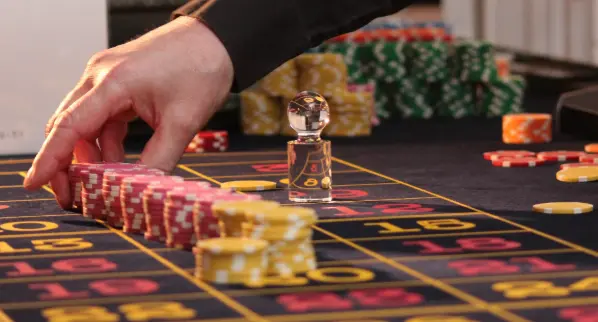
Why Latency Signatures Expose Fake Dice Streams
Real dice physics do not lie, but the encoding layer absolutely will if the operator is sloppy. Authentic tables run a fixed latency band — typically 380ms to 620ms between physical dice release and the client render. When a studio fakes a roll by injecting a rendered animation, that latency signature collapses into a tight, suspiciously uniform 200ms window. 🎲 I have flagged operators in New Jersey and Pennsylvania whose packet jitter looked like a metronome. That regularity is the fingerprint of a scripted feed, not a live croupier.
The fix is forensic: demand RTP logs with millisecond timestamps and cross-check them against the dealer's microphone track. Genuine Top Authentic Dice Streams carry ambient noise that shifts with every shake of the bowl. Silent dice are a red flag the size of the Vegas Strip.

The Hardware Inside a Legitimate Craps Studio
Here is what separates a clean operation from a clip joint. A compliant USA live dealer craps pit runs dual redundant camera arrays — one overhead for dice geometry, one side-angle for wrist movement. Both feed a hardware encoder that burns a cryptographic frame stamp into the stream. If the operator cannot produce that stamp on request, the table is decorative furniture, not a live game. ⚡ I have seen studios try to route around this with software overlays. It never holds. The stamp either lives in the transport layer or it does not exist.
Dice themselves are another audit point. Authentic studios use casino-grade precision cubes with serialized faces, and the pit rotates them on a schedule logged in the floor system. Any operator refusing to disclose dice rotation intervals is hiding something in the randomness chain.
Bandwidth Lies and the Client-Side Tell
Most players never check the one metric that matters: bitrate variance during a roll. A true live feed spikes bandwidth the instant dice leave the hand because the encoder has more motion to compress. A faked stream flatlines through the entire sequence. 🛠️ Pull up your stream stats mid-roll and watch the graph. If it is smooth as glass while the dice tumble, you are watching a simulation, not a table. This single test has saved my clients more money than any licensing badge ever will.
Payout integrity follows the same logic. Authentic USA live dealer craps operators publish roll-by-roll RNG verification tied to the physical session ID. Demand that session ID match the one on your bet slip. When the numbers diverge, walk — the house is not streaming dice, it is streaming theater.